The Lazarus Hacking Group: Inside North Korea’s Billion-Dollar Cyber Empire
Introduction
Introduction
Imagine one morning, the Bangladesh central bank’s New York Fed account sends $81 million quietly to Manila casinos , funds flowing out not by mistake, but by code. Imagine a Hollywood studio’s internal emails leak in titanic waves, causing embarrassment, chaos, and cancellation of its big release. Imagine millions of computers in 150 countries are suddenly locked by a worm, demanding ransom in Bitcoin.
What ties these scenarios together is a shadowy entity known as the Lazarus Group, a North Korean–linked cyber actor whose ambitions straddle espionage, sabotage, and outright theft. Over more than a decade, Lazarus has become one of the most consequential state-sponsored hacking groups in the world. Their operations aren’t just technical feats , they are geopolitical instruments, economic manipulators, and existential threats in the age of digitally enabled states.
Origins & Architecture: From DDoS to Digital Heist Force
Early Days
The earliest public hints of Lazarus, or groups later folded into its umbrella, emerged around 2009–2012, during campaigns labeled “Operation Troy,” which deployed distributed denial-of-service (DDoS) attacks against South Korea and U.S. targets. At that stage, tactics were crude: flood the target, disrupt operations, sow confusion.
But North Korea’s regime was watching. Cut off from global finance and tightly sanctioned, it had to master asymmetric tools. Cyber operations offered a low-cost, high-leverage path. As time went on, the group evolved, absorbing novel malware techniques, reconnaissance capabilities, and an ability to scale operations globally.
Espionage vs. Theft
What sets Lazarus apart from many state hacking groups is the dual , and often overlapping , mission: intelligence collection and revenue generation. Where many cyber espionage groups limit themselves to stealing secrets, Lazarus’s “finance-centric” arms pursue bank heists, cryptocurrency theft, and extortion to fill state coffers.
Within Lazarus, analysts often distinguish sub-units or task forces with specific remit:
- BluenorOff (also known as APT38) focuses on financial theft (e.g. SWIFT manipulations, bank intrusions) to fund the North Korean regime.
- Andariel is often more intelligence-focused: infiltrating enterprises, government agencies, technology firms.
- Other affiliate names, Hidden Cobra, Guardians of Peace, ZINC, Diamond Sleet, may refer to overlapping clusters of activity or alias identities under the broader Lazarus umbrella.
Technically, Lazarus is associated with North Korea’s Reconnaissance General Bureau (RGB) and Bureau 121 in the country’s intelligence apparatus. Bureau 121 is often dubbed North Korea’s “cyber warfare arm.”
Because they operate under the protection of the state, Lazarus actors face little personal risk of prosecution inside North Korea. Their work is part of regime strategy.

Signature Operations & Their Wider Effects
Over the years, Lazarus has executed numerous campaigns that resonated far beyond the immediate victim. Below are some of the most consequential.
1. Hollywood Intimidation: The Sony Pictures Hack (2014)
In late 2014, as Sony prepared to release The Interview , a satirical film about a fictional assassination attempt on Kim Jong-un , its internal servers were breached. Emails, scripts, financial data, and more were leaked. A destructive wiper malware disabled much of Sony’s infrastructure. The attackers, using the name “Guardians of Peace,” threatened theaters and employees, culminating in the cancellation of the release in many regions.

Though the financial impact was relatively modest to the broader economy, the geopolitical shock was significant: the hack was seen as an unprecedented act of digital coercion by a foreign state (albeit unacknowledged officially by North Korea). It marked a turning point in perceptions of state-backed cyber aggression.
2. The Bangladesh Bank Heist (2016)
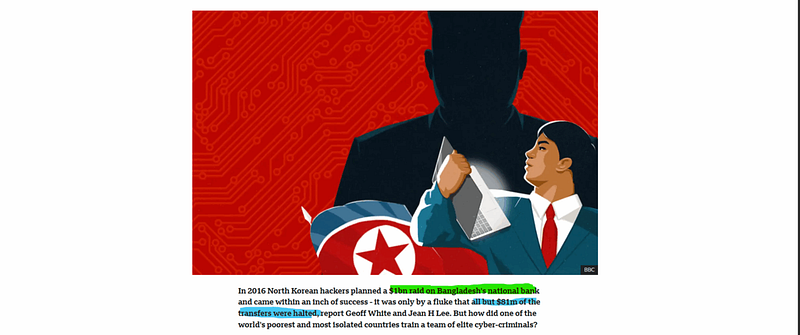
In February 2016, Lazarus carried out perhaps its earliest headline-making financial heist. Exploiting weak SWIFT controls and using malware to mask their tracks, they sent 35 fraudulent transfer requests from Bangladesh Bank’s account at the New York Fed. Most were blocked, but US$81 million succeeded in reaching accounts in the Philippines and Sri Lanka.
The heist had multiple ripples:
It provided the North Korean regime with funds to help evade sanctions.
It exposed the vulnerabilities of global banking messaging systems.
It triggered stricter SWIFT oversight and cybersecurity reforms in banks.

3. WannaCry Ransomware (2017)
In May 2017, a worm known as WannaCry propagated across networks worldwide, encrypting files and demanding Bitcoin ransom. It impacted tens of thousands of organizations , including the UK’s National Health Service (NHS) , and led to billions in collateral damage (downtime, system recovery, reputational harm). Though the direct ransom proceeds for the attackers were relatively minor, the disruptive power of the malware sent a clear message: Lazarus could strike broadly and hurt civil infrastructure.
WannaCry also catalyzed global investment in patching, ransomware defense, and stronger collaborations between private sector and government security agencies.
4. Crypto Thefts and Bridge Hacks (2020s)
As global finance has shifted toward crypto, Lazarus shifted too , but at scale. Key operations:
- Axie Infinity / Ronin Bridge (2022): Lazarus was held responsible for a theft of US$620 million in cryptocurrency from that gaming network.
- Horizon Bridge (Harmony) (2022): They stole around US$100 million in virtual assets.
- Atomic Wallet (2023): Lazarus was tied to a $100 million heist.
- Stake.com (2023): The group was confirmed responsible for a $41 million cryptocurrency theft.
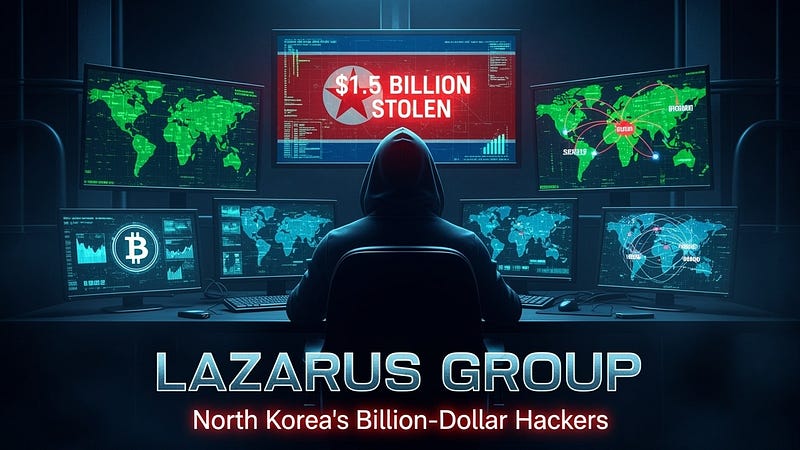
- ByBit exchange (2025): In what is being hailed as the largest crypto exchange hack ever (~$1.5 billion in Ethereum), the FBI linked Lazarus.
- Smaller but frequent crypto attacks: Lazarus directed campaigns against many exchanges, DeFi bridges, and crypto infrastructure, such as “TraderTraitor” and “LightlessCan” malware campaigns.
These operations carry layered impact:
They push regulators, exchanges, and custodians to harden defenses , raising barriers to entry and compliance overhead in blockchain finance.
They destabilize trust in crypto markets, especially among institutional investors.
They provide large, fungible funds to North Korea, which can be laundered, converted, and reinvested in military or intelligence programs.
5. Espionage and Defense Contract Infiltration
Lazarus isn’t just about money. It also runs stealth intelligence operations. In recent years, South Korean authorities disclosed that Lazarus (alongside Kimsuky and Andariel) embedded malicious code into defense contractors’ networks via supply chain channels.
By infiltrating subcontractors, they hopped into critical internal systems, exfiltrated technical designs, weapon schematics, and potentially intellectual property. This amplifies North Korea’s strategic reach , stealing defense know-how rather than developing it internally.
Other espionage tactics have targeted pharmaceutical firms during COVID-19, aiming for vaccine research data, as well as supply chain and vendor networks.
Moreover, Lazarus’s malware families , e.g. LightlessCan, BlindingCan derivatives , typically embed espionage commands and remote control channels hidden in innocuous-seeming code.
Why North Korea Backs Lazarus
1. Sanctions Evasion & Hard Currency Generation
Under decades of UN and unilateral sanctions, North Korea has severely limited official trade and banking avenues. Cybercrime is among the few scalable ways it can generate revenue outside sanctions. Lazarus’s thefts help fund:
- Military spending, especially nuclear and missile programs.
- Covert procurement of dual-use technology.
- Intelligence operations and cyber infrastructure maintenance.
In fact, reports have estimated that cyber theft contributes significantly to North Korea’s revenue, with some analysts attributing double-digit percentages of GDP to illicit finance.
2. Asymmetric Power Projection
North Korea is economically weak, isolated, and technologically behind. But cyber capability is a force equalizer. By using small, agile teams to strike high-value targets globally, they can:
- Compel political attention.
- Deter adversaries by imposing disproportionate costs.
- Influence policy debates around cybersecurity, sanctions, and deterrence.
In this sense, Lazarus is a strategic weapon in North Korea’s diplomatic toolset.
3. Intelligence & Intrusion for Leverage
Beyond theft, gaining access to networks, exfiltrating defenses, intellectual capital, and maintaining persistence in adversaries’ systems gives Pyongyang options:
- Leverage in diplomacy or coercion.
- Military superiority (by stealing weapons designs).
- Pre-positioning for future conflict scenarios.

How Lazarus Works (Inside the Black Box)
To appreciate how deeply Lazarus can reach into global systems, it’s useful to look at the stages of a typical operation:
- Reconnaissance & Target Selection
They map out networks, employees, third-party vendors, tech stacks, and supply chains. Social media, public documents, vendor lists , everything is data. (Yes, your innocuous LinkedIn post could help.) - Initial Access
Common vectors: spear-phishing emails, watering-hole sites, infected attachments, or compromised vendors. The goal is to get a foothold. Later, they may exploit zero-day vulnerabilities or patched but unpatched holes. - Privilege Escalation & Lateral Movement
Using malware stages, they explore the internal network, escalate privileges, and probe for sensitive systems (e.g. payment systems, database servers). - Staging & Obfuscation
They hide code, plant backdoors, schedule tasks , all under the radar. Malware families often include obfuscation, encryption, and command modules. - Execution / Exfiltration / Theft
For financial sabotage, they may interact with SWIFT messaging systems, trigger payments, or siphon funds. For crypto theft, they may use wallet compromise or phishing of signers. For espionage, clean exfiltration of data. - Covering Tracks & Laundering
For crypto, mixing, tumblers, chain hopping, and conversion to fiat are common. For banks, artifacts may be hidden or deleted. Infrastructure is often rerouted via third countries to frustrate attribution.
This high-level playbook is modular , and Lazarus is nimble enough to adapt it to the target scenario.
The Economic & Political Shockwaves
For Businesses & Financial Institutions
- Elevated Cyber Risk Premium
After high-profile Lazarus attacks, insurers, banks, and enterprises raise their cybersecurity budgets, re-evaluate exposures, and shift operating practices (e.g. zero trust, segmentation). - Reputational and Regulatory Pressure
A breach tied to Lazarus can spill into regulatory scrutiny across jurisdictions and damage trust with customers and investors, especially in fintech, defense, or critical infrastructure sectors. - Supply Chain Vulnerabilities
If your vendor is compromised by Lazarus, your systems may be a collateral victim. This has made vendor risk management critical.
For Cryptos & Blockchain
- Market Volatility and Confidence Shocks
Multi-hundred-million-dollar thefts undermine trust in exchange security and the promise of decentralized finance. - Regulatory Clampdown
More stringent compliance (KYC/AML), custody solutions, and blockchain tracing measures are direct reactions to hack waves. - Innovation Push vs. Barrier Raise
While the ecosystem responds by building better protocols (multi-party computation wallets, hardware signers, more robust auditing), the barrier to entry and capital costs rise.
For Geopolitics & Sanctions Regimes
- Sanctions Evasion Pressure
Lazarus operations allow North Korea to circumvent financial isolation. That challenges the effectiveness of Western sanctions regimes. - Cyber Deterrence & Attribution Dilemmas
Few governments retaliate directly for cyber thefts, because attribution is hard and escalation risky. That emboldens actors like Lazarus. - Alliances & Cyber Coalitions
The need to counter Lazarus has driven U.S.–South Korea cyber cooperation, shared intelligence between governments, and joint strategies.
What Can Be Done
Given Lazarus’s sophistication, defense isn’t trivial. But organizations and states can raise the barrier.
- Zero Trust, Microsegmentation & Least Privilege
Segment systems so that even if one segment is breached, the attacker can’t freely traverse. - Supply Chain & Vendor Resilience
Conduct audits, require code reviews, demand security assurance from vendors and partners. Monitor vendor endpoints as critically as your own. - Continuous Threat Hunting & Anomaly Detection
Rather than reactive signature-based defenses, proactively hunt for weird lateral movement, beaconing, or dormant implants. - Red Teaming & Tabletop Exercises
Practice breach scenarios (including Lazarus-style playbooks) to expose gaps. - Blockchain Forensics & Monitoring
For actors in crypto space, tracing suspect addresses, tagging laundered flows, and collaborating with law enforcement and tracing firms. - International Cooperation & Sanctions Policy
Nations need legal, diplomatic, and economic tools to penalize complicit intermediaries in laundering, and align on cyber norms. - Attribution & Signal Disruption
While difficult, governments must invest in intelligence to attribute attacks and, where credible, threaten (or carry out) responses to raise the adversary’s cost.
Lazarus as a Mirror for Cyber Risk’s Future
The story of Lazarus is more than a tale of a rogues’ gallery hacker unit. It is the crystallization of how cyber operations have become instruments of statecraft and financial warfare. In a world where money flows digitally and infrastructure is networked, a small team in Pyongyang (or hidden behind proxies) can destabilize markets, compromise industries, and erode trust.
For business leaders, technologists, and policymakers, the question is clear: Are we reacting fast enough, or are we still treating cyber risk as a back-office problem? Lazarus shows that the front lines of cyber are central to economics and geopolitics now. The future will belong to those who can build resilience before the next Lazarus-type strike makes the headlines.