The 2025 U.S. Federal Court Filing System Breach: A Political, Economic, and Technical Breakdown
Date of Incident: July 4, 2025 Systems Impacted: CM/ECF & PACER (U.S. Federal Judiciary) Suspected Actors: Nation-state–linked or organized…

Date of Incident: July 4, 2025
Systems Impacted: CM/ECF & PACER (U.S. Federal Judiciary)
Suspected Actors: Nation-state–linked or organized cybercriminal groups
Technical Analysis
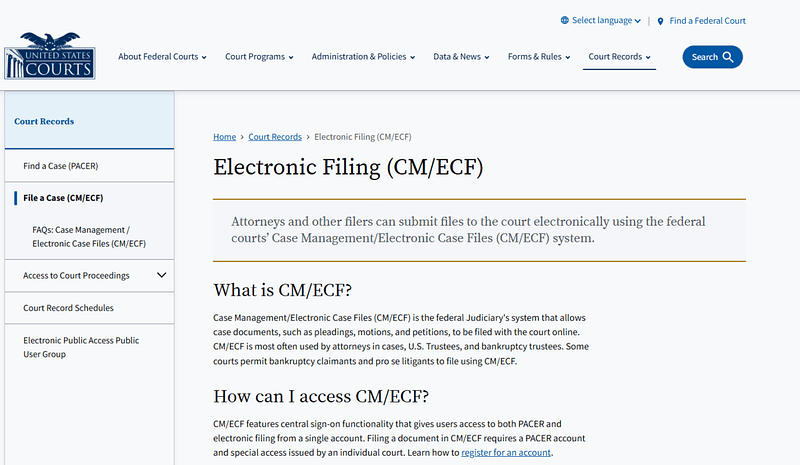
The Case Management/Electronic Case Filing system (CM/ECF) and PACER have been in operation since the late 1990s, designed for accessibility , not cyber resilience.
Technical concerns:
- Legacy code and outdated encryption leave openings for modern exploit techniques.
- Potential entry vectors include unpatched vulnerabilities, compromised judicial staff credentials, or malicious software embedded through third-party contractors.
- Once inside, attackers could exfiltrate sealed case files, court orders, and evidence databases without triggering immediate alerts due to insufficient anomaly detection.
This breach reinforces a truth cybersecurity experts already know: the U.S. court system is decades behind in adopting zero-trust architecture and end-to-end encryption.

2. Political Implications
The judiciary is central to the separation of powers in the U.S. government.
The exposure of sealed or classified cases could:
- Compromise ongoing national security investigations
- Endanger whistleblowers and confidential informants
- Be weaponized for political coercion or geopolitical leverage
If foreign state actors are behind the intrusion, this is cyberwarfare, aimed at eroding trust in America’s legal framework , a core pillar of democracy.
3. Economic Fallout
The breach has ripple effects far beyond the courthouse:
- Court delays impact mergers, bankruptcies, and high-stakes corporate litigation.
- Law firms lose revenue from stalled cases and increased data security compliance requirements.
- Taxpayers ultimately bear the cost of modernizing outdated systems, a process that could run into hundreds of millions of dollars.
4. Cyber Security Lessons Learned
- Upgrade Legacy Systems: Aging infrastructure is a national security risk.
- Enforce Supply Chain Security: Vet all contractors and vendors for cyber readiness.
- Improve Incident Disclosure: Delay in communicating breaches erodes public trust.
- Treat Legal Infrastructure Like Critical Infrastructure: Courts need the same cybersecurity investment as defense, energy, and financial sectors.
Start learning cyber security by enrolling in courses provided by top universities and tech giants:

Closing Thought
The 2025 PACER/CM-ECF breach is more than just another entry in the list of cyberattacks , it’s a warning that even the most foundational pillars of society are vulnerable. Protecting them isn’t just an IT problem… it’s a democracy problem.
Launching Operation BackTrace
On the side, I have some big news !
Yesterday I launched “Operation Backtrace”
Operation BackTrace is your front-row seat to the history of cyberattacks , from the earliest worms and viruses to the most sophisticated hacks shaping the world today.
In “Operation Backtrace” channel, I will talk about:
— Legendary hacks and hacker stories that became digital folklore.
— How attacks worked, why they succeeded, and the defenses that failed.
— The political, economic, and social ripples of cyber incidents.
Why? Because understanding yesterday’s breaches is the only way to defend against tomorrow’s.
Whether you’re a cybersecurity professional, IT student, tech enthusiast, or just someone who loves a good digital detective story . you’re in the right place.
📅 New uploads every week ; short-form breakdowns + long-form deep dives.
🛡 Stay sharp, stay curious… and trace it back.