Red Team vs. Blue Team
In cybersecurity circles in 2026 the Red Team versus Blue Team debate still consumes a lot of oxygen in Slack channels, Discord servers…
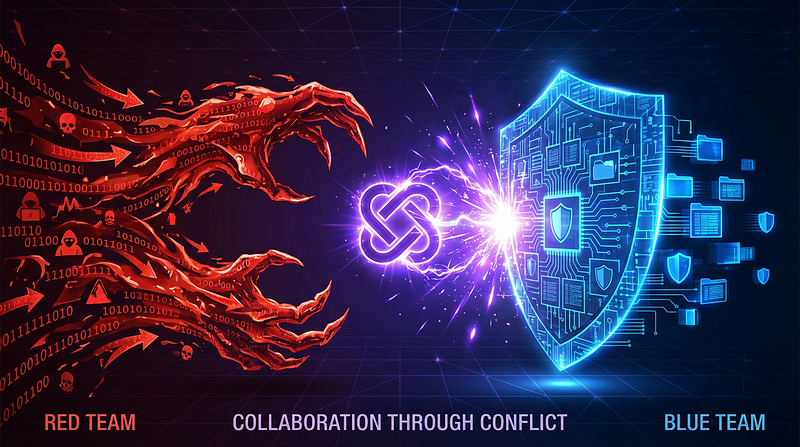
Red Team vs. Blue Team in Cybersecurity
In cybersecurity circles in 2026 the Red Team versus Blue Team debate still consumes a lot of oxygen in Slack channels, Discord servers and forums. People act as if the only two possible career paths in the field are offensive exploitation or defensive monitoring.
That view is too limited and frankly outdated. The real question isn’t just whether you want to break into systems or block intrusions. It’s about whether you enjoy solving puzzles under pressure with the stakes set at real economic and reputational loss for an enterprise.
The Blue Team
Behind every successful security strategy you find defenders and attackers thinking deeply about systems, threat models and the logic that connects cause and effect.
The Blue Team is not passive. True defenders investigate anomalies in logs, correlate alerts, validate hypotheses and turn what looks like noise into actionable insight that keeps the business running.
When an alert about an unusual login pops up the analyst interrogates timestamps, cross-references threat intel feeds and pieces together small clues into a narrative that reveals whether an attacker is probing for weakness or a legitimate user is travelling abroad.
That level of intellectual engagement requires patience and curiosity. Tools like CrowdStrike, Wireshark or Python scripts become extensions of thinking, not crutches. In this environment you learn fast that defense is active, dynamic and unforgiving because you only need to fail once and the lights go out.


The Red Team
When people romanticize Red Teams they often focus on the thrill of intrusion and overlook the discipline it demands.
A Red Teamer’s job is systematic and methodical. They gather recon, harvest public intel, research leaked credentials and then methodically test entry vectors like phishing campaigns or vulnerable web endpoints. Getting initial access is just the beginning.
The real work is persistence, lateral movement and privilege escalation while constantly probing whether the Blue Team sees what’s happening. That relentless curiosity to deconstruct systems and exploit weak logic makes Red Teamers innovative problem solvers who think like actual adversaries. But make no mistake, succeeding in real engagements takes far more effort than sandbox labs suggest.
The endless dead ends, failed toolchains and creative workarounds define the craft. Only those willing to iterate deeply on failure and learn from every mistake mature into effective offensive operators.
For those looking to break into this field, the methodology is often try, break, and learn. In training environments like TryHackMe, aspiring pen-testers might practice on simulated targets such as a fake bank application where they employ tools like dirb to brute-force web directories.
This might lead to discovering a hidden bank deposit page or an unprotected admin panel. This process illustrates the core of the offensive security mindset: a relentless curiosity to deconstruct systems. However, while browser-based labs are fantastic for democratization, they can sometimes give a false sense of ease.
Real-world Red Teaming involves significantly more failure, dead ends, and frustration than a guided lab might suggest, requiring a level of persistence and out-of-the-box thinking that is difficult to teach in a classroom setting.

The Purple Team & The Reality of Entry Level
Today Purple Team collaboration is overtaking strict Red versus Blue silos. Successful teams rarely operate in isolation. The best security outcomes emerge when attack simulations feed directly into defensive learning loops.
That means people on both sides need a grounding in the other’s mindset. If you cannot read logs you cannot effectively evade detection. And if you don’t understand hacker tradecraft you cannot build defenses that anticipate real threat behavior.
That’s why starting in IT support or help desk roles builds a foundation few bootcamps teach. Troubleshooting printer issues or resetting passwords teaches you how systems actually behave.
From there expanding into SOC analyst work gives you real context about how attacks are detected and mitigated and why certain indicators matter. Foundations in networking, operating systems and log analysis are not optional.
They are the metal that both swords and shields are forged from. Companies in 2026 care far more about demonstrable skills than paper certifications alone. Employers want to see evidence of running a SIEM, building dashboards, detecting brute force patterns and documenting incidents with clarity and precision.
Sample SOC Analyst Roadmap: From Help Desk Ticket to Threat Hunter
You are currently sitting at a Help Desk. You are resetting passwords, troubleshooting printer jams, and explaining to a user for the third time why they cannot use Password123 for their corporate login. It feels mundane, but here is the opinionated truth that most bootcamps won’t tell you: You are already doing cybersecurity work.
The biggest barrier to entry for a SOC (Security Operations Center) Analyst isn’t learning how to hack; it’s understanding how an enterprise environment actually functions. A hacker who doesn’t know what Active Directory looks like when it’s working will never spot when it’s being abused. The transition from Help Desk to SOC Analyst is not a leap of faith; it is a calculated engineering problem. In 2026, the market is flooded with paper-certified juniors, so to stand out, you need a strategy that prioritizes demonstrable skills over just passing multiple-choice exams.
Phase 1: The Tactical Pivot (Months 0–3)
Don’t quit your job yet. Instead, change how you view it. The Help Desk is your live fire training ground. Every time you touch a ticket, view it through a security lens. When you reset a user’s password, you aren’t just fixing a login; you are performing Identity and Access Management (IAM).
If a computer is acting slow, do not just reboot it; check the Task Manager or Resource Monitor for suspicious processes that is Endpoint Detection. Start volunteering for tickets that touch on security: phishing reports, antivirus alerts, or permission changes.
During this phase, your study time should be dedicated to the CompTIA Security+ (SY0–701 or newer). I know, everyone says it, but they say it for a reason. This certification is the non-negotiable HR Filter. Without it, your resume often gets auto-rejected by Applicant Tracking Systems before a human ever sees it. However, do not just memorize the acronyms.
Understand the why. When you study the “Kill Chain,” map it to what you see at work. If you see a phishing email, identify which stage of the Kill Chain it represents (Delivery). This mental shift turns your boring 9-to-5 into a paid internship for your future career.
Phase 2: The Skill Builder (Months 3–6)
Once you have the Security+, you have the keys to the interview, but you don’t yet have the skills to pass the technical assessment. This is where most people fail they collect certifications like Pokémon cards but can’t read a log file. Stop chasing the CEH (Certified Ethical Hacker); for a SOC role in 2026, it is overpriced and undervalued. Instead, focus on Blue Team Level 1 (BTL1) or Certified Cyber Defender (CCD). These are practical, hands-on certifications. You will actually use a SIEM (Security Information and Event Management) tool, analyze traffic in Wireshark, and write incident reports.
This is also when you must become comfortable with Linux. You don’t need to be a wizard, but you need to know how to navigate the command line (CLI) without panicking. Install a virtual machine (VM) with Ubuntu or Kali Linux on your home computer. Force yourself to use the terminal for basic tasks: moving files, checking network connections (ip a, ping, netstat), and reading logs (cat, grep, tail). In a SOC, you will often stare at a black screen with white text; get used to it now.
Phase 3: The Home Lab Portfolio (Months 6–9)
Here is the secret weapon to bypass the 3–5 years experience requirement: Build a Home Lab and blog about it. Employers want to see passion. If you can show them you built a corporate network in your bedroom and attacked it, you are instantly more valuable than someone with a master’s degree and zero practical hours.
- Build the Environment: Use a hypervisor (like VirtualBox or VMware). Set up a Windows Server (act as the Domain Controller) and a Windows 10 “victim” machine.
- Install the Eyes: Deploy a free SIEM like Wazuh or Splunk Free. Install the agents on your Windows machines so the logs are sent to your SIEM.
- Simulate the Attack: Use a Kali Linux VM to launch a simple attack against your Windows machine (like a brute-force attack using
Hydraor a port scan usingNmap). - The Analyst Work: Go into your SIEM. Can you see the attack? What does it look like? Create a dashboard that alerts you when 10 failed login attempts happen in 1 minute.
- The Deliverable: Write a blog post (Medium or LinkedIn) titled “How I Built a SIEM to Detect Brute Force Attacks.” Include screenshots of the logs, the alert logic, and the successful detection. This link goes at the very top of your CV.

Phase 4: The Hunter (Months 9+)
When you apply, stop calling yourself a Help Desk Technician. You are an IT Support Specialist with a focus on Security Operations. Rewrite your resume bullets to highlight the security relevance of your past work. Instead of Fixed printer issues, write “Maintained availability of critical business hardware and managed endpoint security patches.”
Prepare for the technical interview by practicing Log Analysis challenges on sites like LetsDefend or CyberDefenders. In the interview, when they ask, “Tell me about a time you solved a problem,” do not talk about a reset password. Talk about your Home Lab. Tell them, “I was simulating a Golden Ticket attack in my home lab, and I noticed that standard logging didn’t catch it, so I had to enable Sysmon event ID 10…” That is the language of a SOC Analyst.
Suggested Zero to Hero Project List:
- Project A: Set up a cloud server (AWS/Azure free tier) with a “Cowrie” honeypot and map where the attacks come from.
- Project B: Analyze a real phishing email (from your spam folder) in a safe sandbox. Extract the header, the sender IP, and the malicious link. Write a report.
- Project C: Ingest sample data into Splunk and build a dashboard that visualizes Failed Logins by User and Critical Errors over Time.

Conclusion
Both sides push you to think critically about cause and effect, timing, patterns and human behavior. If you thrive on pressure and investigative logic, defense might be where you find your flow.
If you love breaking problems down and reconstructing them from the attacker’s point of view, offensive security could be your home. Either way the path is layered and requires dedication.
Do not obsess over team color. Invest deeply in the fundamentals first, because whether you end up defending a network or probing one for weak logic, the same rigorous analytical mindset defines elite practitioners in cybersecurity.