Qilin Ransomware: Real Attacks, Behavioral Patterns & How SOC Teams Can Spot It Early
If you’ve been paying attention to the modern ransomware landscape, you’ve probably noticed a name that keeps showing up across leak sites…
If you’ve been paying attention to the modern ransomware landscape, you’ve probably noticed a name that keeps showing up across leak sites and threat-intel reports: Qilin ransomware. It might not be as mainstream as LockBit or ALPHV, but in the defender world, Qilin has become one of those threats that instantly raises eyebrows. And for good reason.
Let’s walk through what makes Qilin so dangerous, how it actually infects environments, the real organizations that have been hit, the Indicators of Compromise you can hunt for, and why defenders treat this ransomware family as a top-tier threat.

What Exactly Is Qilin Ransomware?
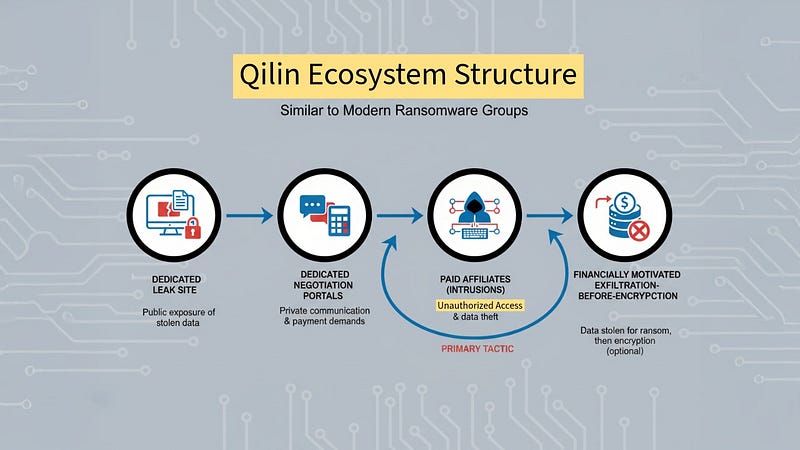
Qilin is a Ransomware-as-a-Service platform operated by a core team but executed in the real world by paid affiliates. These affiliates aren’t script kiddies; many of them are skilled intrusion operators who know Active Directory, know lateral movement, and know how to quietly take over an environment before dropping the final payload. What makes Qilin stand out is its customization. Affiliates can tailor almost everything:
- ransomware extensions
- ransom note templates
- excluded folders
- services to kill
- encryption approach
- backup removal logic
It’s flexible, fast, and destructive , a nightmare combo for SOC teams.
Qilin by the Numbers: What the Stats Tell Us
A few data points that help paint a clear picture:
- Active since: ~2022
- Victim regions: Europe, Middle East, Australia, Asia
- Common sectors targeted: healthcare, logistics, manufacturing, finance, government
- Double extortion: extremely common
- Initial access: stolen credentials, VPN/RDP misuse, phishing, public server exploits
- Leak site activity: dozens of victims publicly listed
These aren’t opportunistic drive-by infections , Qilin incidents typically involve targeted intrusions with days or weeks of reconnaissance before the ransomware is deployed.
How Qilin Gets In: The Infection Chain Explained
Let’s break down the flow analysts usually see behind the scenes.
1. Initial Access
Affiliates break in using:
- credentials purchased on the dark web
- VPN/RDP without MFA
- phishing attachments
- vulnerable public servers
This is the quiet phase.
2. Execution of Loader or Payload
Once inside, attackers drop a loader via:
- obfuscated PowerShell
- DLL side-loading
- mshta/wscript abuse
- malicious Office macros
This is where the first suspicious process activity begins.
3. Privilege Escalation & Discovery
Affiliates enumerate:
- AD structure
- file shares
- privileged accounts
- backup servers
- business-critical systems
Then they move laterally usually using legitimate credentials.
4. Pre-Encryption Actions
Right before encryption, Qilin tries to maximize damage:
- deleting shadow copies
- stopping backup agents
- disabling recovery environments
- killing processes that keep files locked
This is one of the earliest high-confidence detection points for SOC teams.
5. Encryption & Ransom Note Explosion
Once triggered, Qilin moves fast:
- encrypts thousands of files per minute
- renames files with custom extensions
- drops ransom notes like:
- !Qilin_ReadMe!.txt
- RECOVER_FILES.txt
You’ll see identical ransom notes replicated across directories.
6. Optional Data Exfiltration
Many affiliates exfiltrate sensitive data first.
SOC teams often detect:
- large outbound transfers
- RAR/ZIP archives created in temp folders
- suspicious HTTPS POST requests to new domains
And then the extortion starts.
Cyber Security Notes and Cheat Sheets 👇

Indicators of Compromise (IOCs) You Should Never Ignore
Filesystem IOCs
- sudden wave of ransom notes
- mass file renames
- encrypted extensions appended
- high-entropy file writes
- unexpected ZIP/RAR archives
Process IOCs
vssadmin Delete Shadows /all /quietwmic shadowcopy deletebcdedit /set {default} recoveryenabled No- Office apps spawning PowerShell or HTA engines
- Rundll32 executing from temp paths
Network IOCs
- outbound HTTP/HTTPS POST requests to unknown domains
- enormous outbound traffic bursts
- unusual SMB activity during off-hours
- RDP connections from non-admin workstations
Behavioral IOCs
- 1000 file writes per minute by the same process
- identical ransom notes appearing everywhere
- backup-related services suddenly stopping
- file-system traversal across mapped shares
These behaviors give your SOC something solid to hunt for even if the malware itself is a new build.

Real Qilin Victims
To understand the impact, let’s talk about real breaches Qilin proudly leaked:
📌 UK Ambulance Service (Yorkshire & North East)
Qilin dumped sensitive patient and staff data online.
Quote from coverage:
“Qilin published confidential patient records and internal staff documents on their leak site.”
Healthcare doesn’t get time off during ransomware recovery, this hit operationally and emotionally.
Mondelez Supplier (Supply Chain Targeting)
Qilin leaked internal documents from a supplier tied to a global food giant.
One report noted:
“Attackers released internal operational and financial documents to pressure the organization.”
Supply chain attacks = wide blast radius.
Australian Mortgage Brokerage
A financial services provider suffered a breach involving private customer files.
Qilin claimed to have:
“Accessed internal systems and exported highly sensitive customer information.”
Financial data breaches carry massive regulatory fallout.

Why Qilin Is Feared in the Cybersecurity Community
Let’s be honest, defenders don’t scare easily. But Qilin checks all the wrong boxes:
1. Skilled affiliates
These operators know AD, credential theft, lateral movement, and privilege escalation.
2. Extremely fast encryption
By the time an alert fires, file shares may already be compromised.
3. Customizable ransomware builds
Every campaign looks slightly different complicating signature-based detection.
4. Double extortion as the norm
Even perfect backups won’t save you from a data leak threat.
5. Coverage across critical industries
Healthcare, logistics, finance sectors where downtime is catastrophic.
6. Consistent, long-term activity
Some groups fade quickly. Qilin has persisted through multiple cycles of takedowns.
This is why SOC analysts study Qilin’s behavior closely you don’t get a second chance with this one.
Conclusion
Qilin ransomware isn’t just another threat in the noise — it’s a well-organized criminal ecosystem with the skills and playbooks to take down enterprises that aren’t prepared.
The good news is this:
Qilin is dangerous, but it’s not invisible.
Understanding its attack flow, its real-world behavior, and its distinct IOCs gives defenders a real chance to detect early and contain fast.
Stay alert, keep your detections sharp, and remember ransomware doesn’t wait for anyone.