How to Take Elite Notes for Cybersecurity Certification Exams
Introduction

Introduction
Cybersecurity certifications like OSCP, CPTS, CompTIA Cybersecurity Analyst (CySA+), and BTL1 demand not just technical skill but also the ability to retain and quickly retrieve vast amounts of information. Elite note-taking transforms your study sessions into a structured, searchable knowledge base , and in some cases, even gives you a competitive advantage during open-book exams.
Why Note-Taking is Crucial for Cybersecurity Exam Prep
- Retention ; Writing notes forces active engagement, improving memory.
- Quick Reference ; Reduces the time spent searching for commands or scripts.
- Reusable Playbooks ; Your notes can become your go-to reference for future engagements.
- Stress Reduction ; Knowing you have a well-organized resource boosts confidence.
Best Tools for Cybersecurity Note-Taking

Pro Tip: Choose tools that allow syntax highlighting for commands and code snippets.

My Methodology: The 3-Layer Note System
Cheat Sheets ; Condensed one-pagers for quick recall.
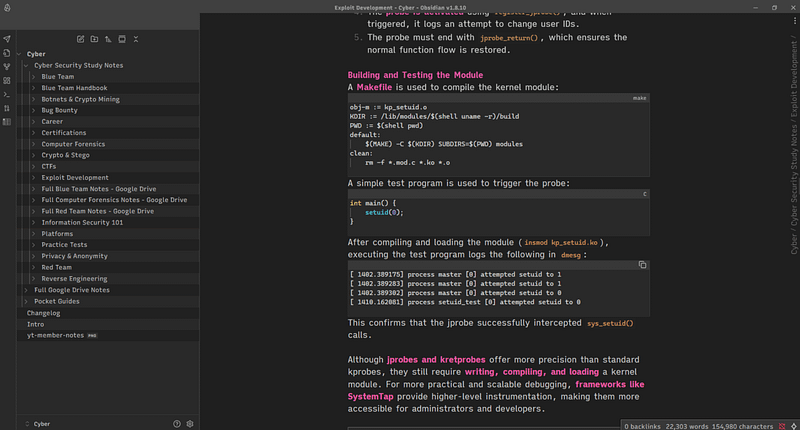
Concept Notes ; Explain the “why” behind techniques (e.g., what a reverse shell does).
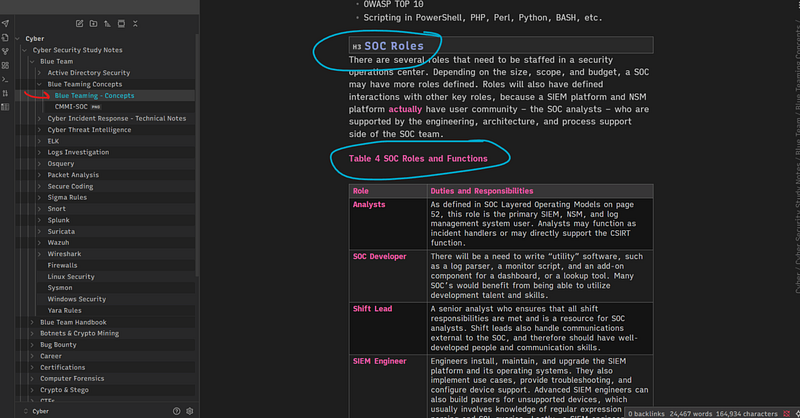
Procedure Notes ; Exact commands, tools, and step-by-step attack chains.

Organizing Your Notes
- By Topic: Recon, Enumeration, Exploitation, Privilege Escalation, Post-Exploitation.
- By Exam: OSCP-specific (Buffer Overflows), CPTS-specific (AD attacks), etc.
- Tagging:
#windows,#linux,#web,#priv-esc. - Internal Linking: Connect related techniques for faster navigation.

Techniques to Maximize Retention
Exam Binder: For open-book exams, compile all notes into a single PDF.
Active Recall: Test yourself without looking at notes.
Mind Mapping: Use tools like XMind to visualize workflows.
Color Coding: Mark verified vs. experimental commands.
Final Tips
- Keep your notes searchable , use consistent formatting and tags.
- Write in your own words to improve understanding.
- Update notes regularly as you discover better tools, scripts, or commands.