How AI-Powered Hoaxes Threw U.S. Campuses into Chaos
Introduction

Introduction
Imagine you’re in the university library during the first week of classes. It’s buzzing with energy. Suddenly, your phone lights up with an emergency alert: ACTIVE SHOOTER ON CAMPUS. LOCK DOWN IMMEDIATELY. Panic erupts. You and hundreds of other students scramble for cover, hiding under desks, your heart pounding as you hear sirens wailing in the distance.
For students at over ten U.S. universities, including Villanova, UNC-Chapel Hill, and Kansas State, this nightmare scenario became a reality in late August 2025. The only thing is, the gunman wasn’t real.
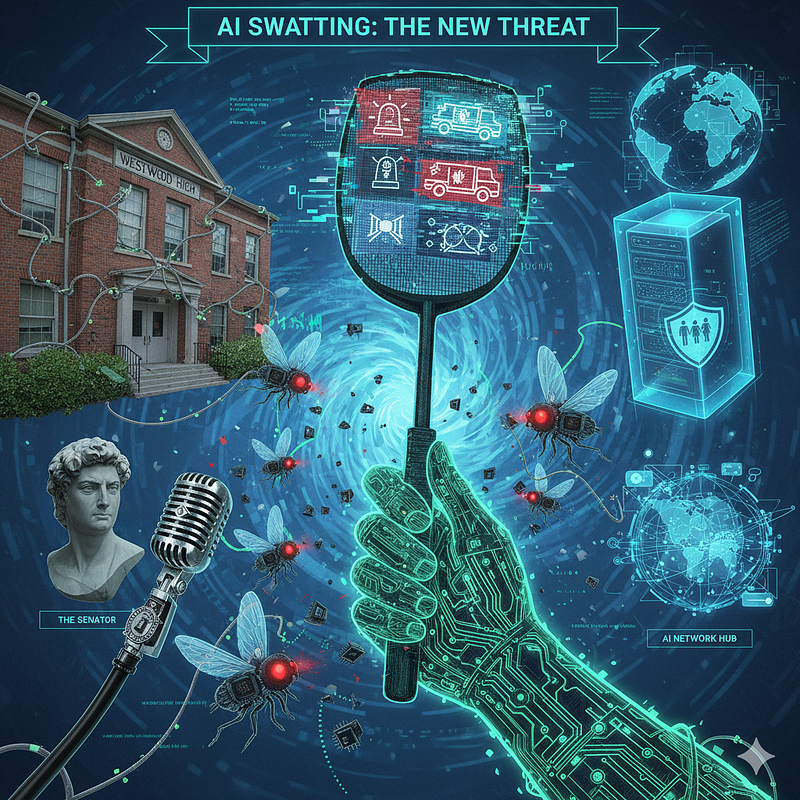
According to reports from outlets like WIRED and Axios, alongside analysis from security experts, these weren’t isolated pranks. They were coordinated “swatting” attacks, linked to an online group called Purgatory. This group is believed to be part of a larger, more notorious extremist network known as “The Com.” They used a frighteningly modern toolkit to trigger lockdowns, massive police responses, and widespread panic, all without firing a single real bullet.
Let’s break down how they did it, why they did it, and what it tells us about the future of digital threats.
AI Swatting
This wasn’t just someone making a prank call from their bedroom. Purgatory used a sophisticated, scalable, and terrifyingly effective set of tactics.

- AI-Generated Audio: To make the calls sound chillingly authentic, the perpetrators didn’t just shout. They used AI to digitally insert the sounds of gunfire, screams, and chaos into the background of their calls to 911. For the dispatcher on the other end, it sounds like they’re listening to a real-time massacre.
- Digital Ghosting (VoIP & Anonymizers): The calls were placed using tools like Google Voice and other Voice-over-IP (VoIP) services. By routing their calls through the internet and likely using VPNs, they effectively wore a digital mask, making it incredibly difficult for law enforcement to trace the call back to its origin.
- A “Plug-and-Play” Script: The group seemed to work from a shared template. The calls were eerily similar: claim an active shooter, name a central, busy building like the library, and call during a time of day when the campus would be packed. This standardization allowed them to hit target after target with chilling efficiency.
- Streaming for Clout: In a disturbing twist, some of these calls were reportedly livestreamed on platforms like Discord. The group would share news coverage of the panic they caused, using it as a twisted form of propaganda to brag, recruit new members, and amplify their impact.
- Swatting-as-a-Service: Believe it or not, they’ve turned this into a business. Purgatory appears to offer its services for a fee. Early on, a school swatting might cost as little as $20. As they’ve gained notoriety, prices have reportedly jumped to nearly $100 for a university-level event.

Why Would Anyone Do This?
It’s easy to write this off as a twisted prank, but the motivations seem to be a dangerous cocktail of ego, profit, and ideology.
- Notoriety and Street Cred: In the dark corners of the internet where these groups operate, causing chaos earns you status. Successful swattings, especially those that make the news, are a source of prestige and psychological satisfaction.
- Money: While they are making money, some reports suggest they’ve collected around $100,000, many analysts believe the financial gain is secondary to the thrill and the notoriety.
- Sowing Fear and Disruption: Universities are symbolic targets. They are centers of community, learning, and progress. Attacking them causes widespread panic, erodes trust in safety systems, and can serve a broader extremist goal of destabilizing society.
The Real-World Fallout
Even though the gunman is fake, the danger is very real.
Physical Risk
A heavily armed police force responding to what they believe is a live mass shooting is a volatile situation. The risk of a tragic mistake, a misfire, an injury during a panicked stampede, is terrifyingly high.
Psychological Trauma
For the students, faculty, and parents, the terror is real. These events can cause lasting anxiety and trauma. Repeated hoaxes can also lead to “alert fatigue,” where people start to doubt the legitimacy of real emergency warnings.
Massive Resource Drain
Every swatting call diverts dozens of police officers, paramedics, and emergency responders from real crises. It costs cities a fortune in overtime and operational expenses and grinds entire communities to a halt.
Why This is So Hard to Stop
If we have an idea of who is behind this, why can’t we just shut them down? Unfortunately, it’s a high-tech game of cat and mouse. The same digital masks (VoIP, VPNs) that hide their identities also make them incredibly difficult to prosecute, especially if they are operating from overseas.
And put yourself in the shoes of a 911 dispatcher. A call comes in with screaming and gunfire in the background. They have to make a split-second decision with lives potentially on the line. They can’t afford to hesitate and risk being wrong. The attackers exploit this very human and necessary part of our emergency response system.
So, How Do We Fight Back?
There’s no single magic bullet, but a multi-layered defense can make a huge difference.
- Smarter 911 Centers: We need to equip dispatchers with better tools and training. This includes teaching them to ask subtle verifying questions and deploying technology that can help flag the tell-tale signs of AI-generated audio in real time.
- Better Campus Protocols: Universities need a specific playbook for suspected hoaxes. This means having ways to quickly verify a threat (like checking security cameras) and clear communication channels to give an “all-clear” message to reduce panic.
- Taking the Fight Online: Law enforcement needs to actively monitor and disrupt the online platforms where these groups coordinate. This means working with companies like Discord and Telegram to take down servers used to advertise and organize these attacks.
- Closing the Legal Loopholes: We need stronger laws that make swatting a serious federal crime, with increased penalties for using AI to enhance the hoax. Because these attacks often cross state and even international lines, we need better cooperation between different law enforcement agencies.
The Unanswered Questions Keeping Experts Up at Night
There’s still a lot we don’t know, and the answers are crucial for building a better defense.
- What specific AI tools are they using? Are they off-the-shelf, or have they built something custom?
- Where are the attackers physically located? Are they in the U.S., or are they hiding in countries that won’t cooperate with investigations?
- How are they getting paid? Tracing the money could unravel the entire network.
- Will this constant threat force our emergency services to become slower or more skeptical, potentially delaying their response to a real tragedy?
The Bottom Line
This campaign is a chilling glimpse into the future of digital threats. It’s not just “kids playing pranks”, it’s an organized, for-profit operation that combines AI, anonymous communications, and social media to cause real-world panic and physical risk.
From a cybersecurity perspective, this is a blueprint for a new kind of hybrid attack, where digital tools are the weapon and our emergency response systems are the target. We have to treat it with the gravity it deserves, investing in the technology, policies, and international cooperation needed to fight back.